Sapphire or diamond? What actually matters
Sapphire is the most serious alternative to diamond, and for a lot of people it is simply the better ring. Here is the comparison without the sales pitch on either side.
Durability: closer than you think
Diamond is 10 on the Mohs scale and sapphire is 9. That single step sounds small and is not — the Mohs scale is not linear, and diamond is substantially harder than sapphire in absolute terms.
But hardness past a certain point stops mattering for practical wear. At 9, sapphire resists scratching from essentially everything it will encounter in daily life, including household dust, which contains quartz at 7 and is what actually abrades softer stones over the years. Both stones will look substantially the same in thirty years.
Sapphire has one real advantage here: no cleavage plane. Diamond has four, and a diamond struck at the wrong angle with enough force can chip along one. It is uncommon but it happens, and it is not repairable.
Cost: the gap is large
This is the most consequential difference. A fine two-carat sapphire can cost a fraction of a two-carat diamond of good quality. For the same budget you can generally have a considerably larger stone, a better setting, or both.
The gap narrows at the very top. Unheated Kashmir and Burmese sapphires of exceptional color reach diamond prices and beyond. But in the range most people are actually shopping, sapphire buys far more stone.
Color: sapphire is not just blue
Sapphire is corundum, and every color of corundum except red is a sapphire. That includes teal, the parti-colored stones that show two colors at once, peachy padparadscha, pink, yellow, green, and colorless.
Teal and parti sapphires from Australia and Montana have become some of the most requested engagement stones of the last decade, and they are genuinely distinctive in a way a colorless round brilliant cannot be.
Sparkle: a real difference
Diamond has a higher refractive index and greater dispersion than sapphire, which means more brilliance and more fire. A well-cut diamond returns light in a way sapphire does not, and if that flash is what you want, no colored stone will substitute for it.
Sapphire trades that for color saturation and depth. A fine sapphire has a velvety richness that a colorless stone has no way to produce. Neither is better; they are different effects.
Treatment and disclosure
Most sapphire on the market is heat treated, which is stable, permanent and accepted throughout the trade. Unheated stones of fine color carry a significant premium and should come with a report.
The thing to avoid is diffusion-treated material, where color is added to the surface of a pale stone. It should always be disclosed and is worth far less. Ask, and get the answer in writing.
So which one
Choose diamond if you want maximum brilliance, if traditional resale value matters to you, or if the person wearing it has always pictured a diamond. Those are all legitimate reasons.
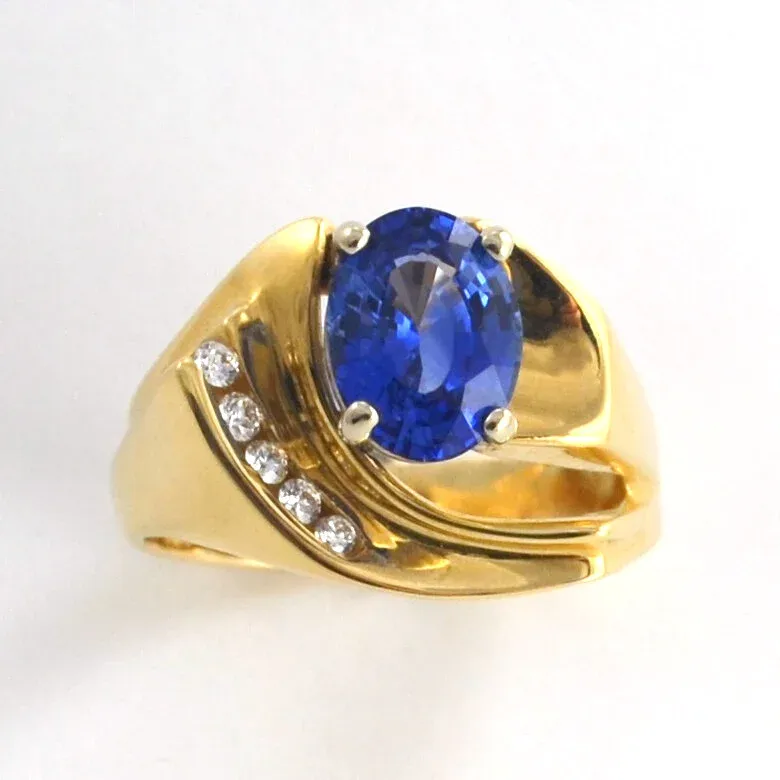
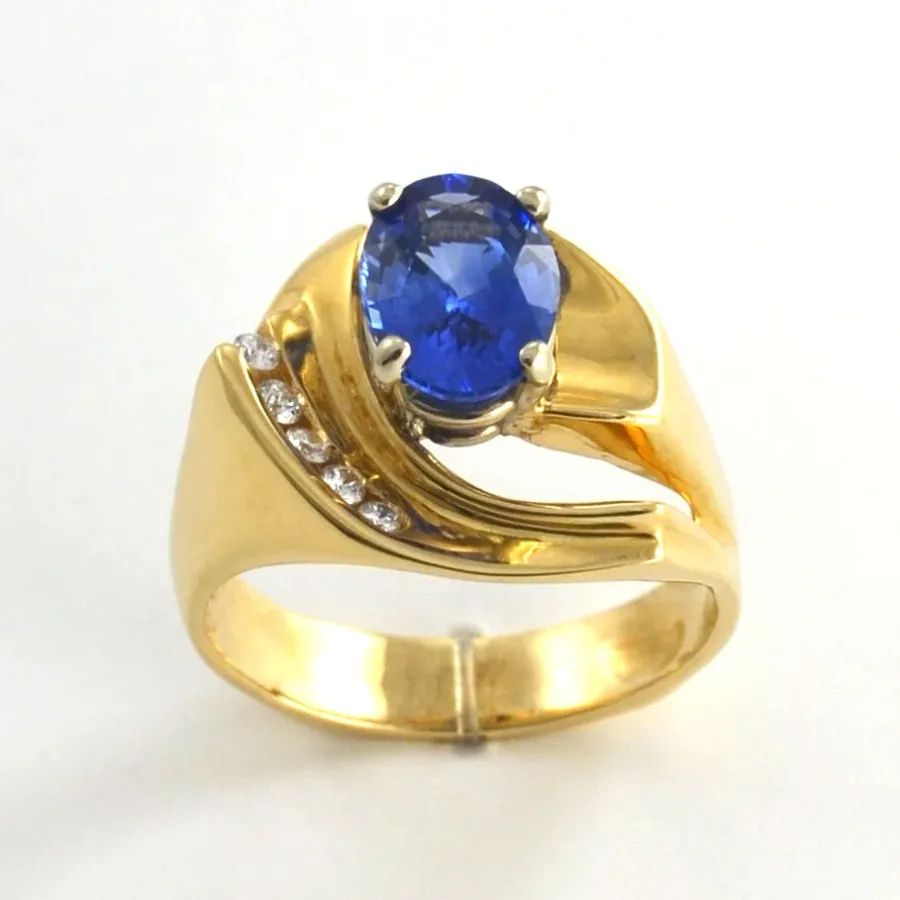
Choose sapphire if you want color, if you want more visible stone for the money, or if you want a ring that does not look like every other ring. At 9 on the Mohs scale you are giving up almost nothing in practical durability.
Frequently asked
Is a sapphire engagement ring durable enough for everyday wear?
Yes. At 9 on the Mohs scale sapphire is second only to diamond and moissanite among stones in common use, and it has no cleavage plane. It is one of the most practical colored stones for a ring worn every day.
Are sapphire engagement rings cheaper than diamond?
Generally yes, and often by a wide margin at comparable size and quality. The exception is exceptional unheated material from historic sources, which can rival or exceed diamond prices.
What color sapphire is most popular for engagement rings?
Classic cornflower blue remains the most requested, but teal and parti-colored sapphires from Montana and Australia have grown enormously in popularity, along with peach and pink.