Ametrine
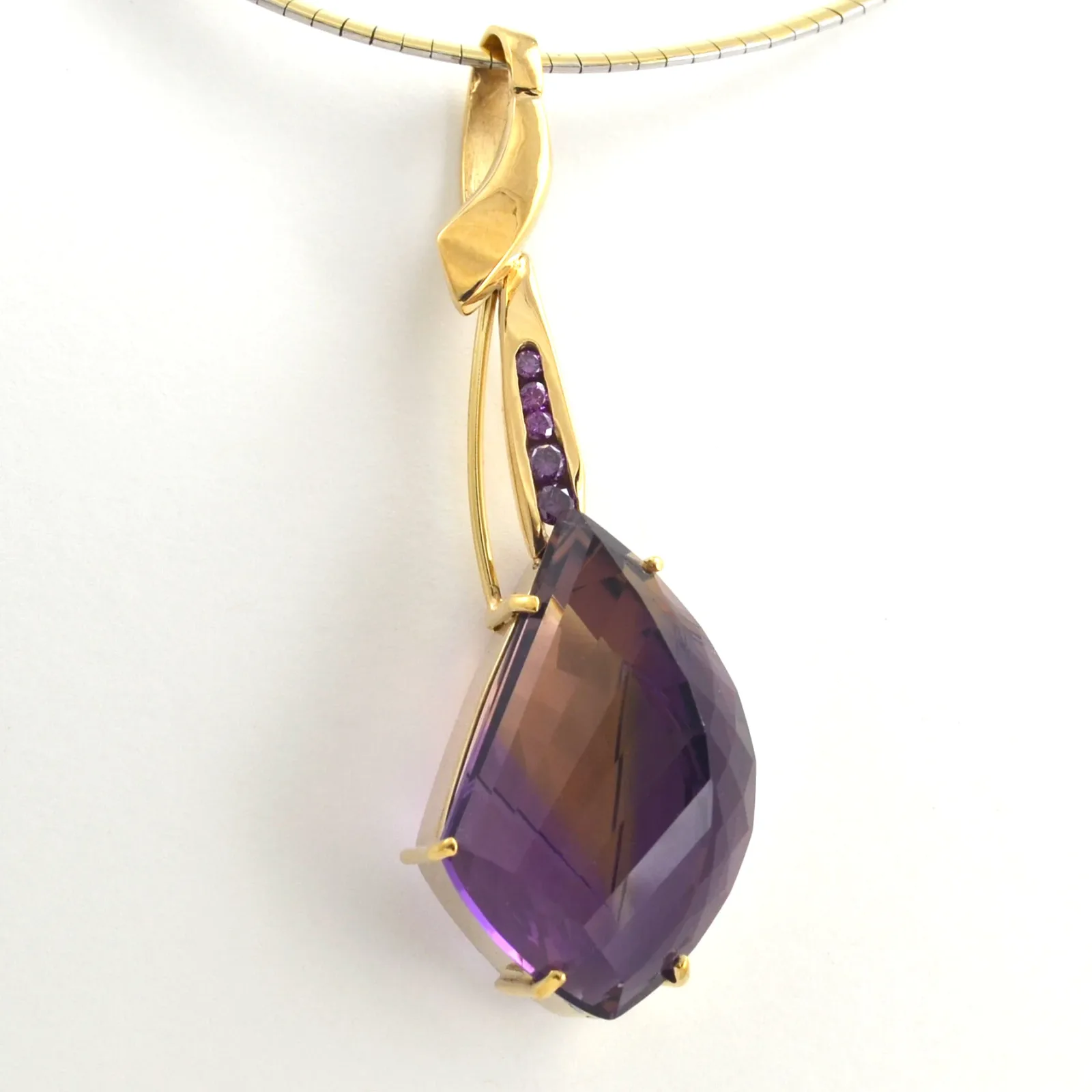
One crystal, two colors, divided by a line the earth drew — ametrine is amethyst and citrine grown together in the same stone.
About Ametrine
Ametrine forms where conditions within a growing quartz crystal changed enough to produce amethyst in one zone and citrine in another. The result is a single stone split between purple and gold, usually with a surprisingly sharp boundary between them.
Nearly all natural ametrine comes from the Anahí mine in eastern Bolivia, which makes it geographically rarer than its modest price suggests. The cutter’s decision is where to place the boundary — straight down the middle for a clean split, or oriented to blend the two through the stone.
At 7 on the Mohs scale with no cleavage, ametrine is as practical as any other quartz, and it is available in large sizes that let the two-color effect actually read.
Why Sharon works with ametrine
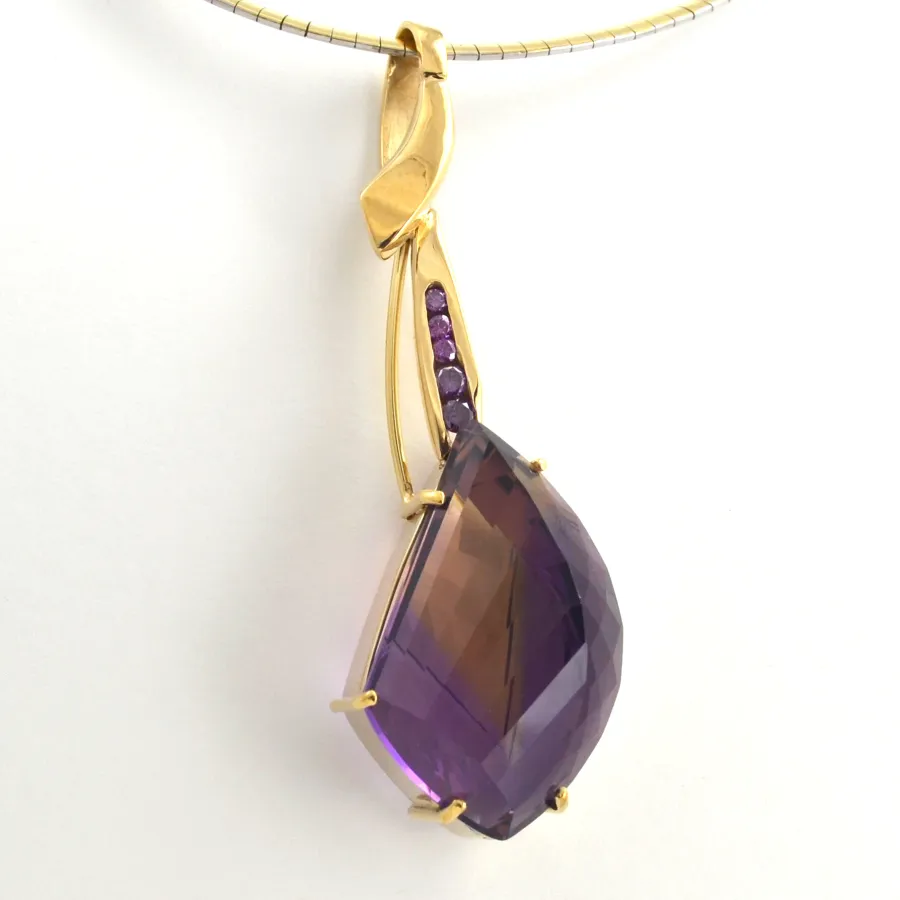
Sharon uses ametrine in statement pendants where the stone is large enough for the color division to be the design. It is a stone that does not need help.
Caring for ametrine
Warm soapy water and a soft brush. Avoid prolonged strong sunlight and high heat.
Common questions about ametrine
Is ametrine natural?
Natural ametrine exists and comes almost entirely from the Anahí mine in Bolivia. Synthetic and heat-treated imitations also exist, so provenance is worth asking about.
Why are the two colors so sharply divided?
The boundary marks a change in the conditions under which the crystal was growing — differences in temperature and iron oxidation state produced amethyst on one side and citrine on the other.
Ametrine jewelry by Sharon Teaman
Each piece is one of a kind and made by hand in State College, Pennsylvania.
Commission a ametrine piece
Tell Sharon the color, the shape or the budget you have in mind. She sources ametrine year round and will find the right stone before a single sketch is made.